
The Changing World of Cricket: The Search for Balance Between Three Formats
क्रिकेट आज तीन प्रारूपों — टेस्ट, वनडे और टी-20 — के बीच संतुलन की तलाश कर रहा है। टी-20 और फ्रैंचाइज़ी लीगों ने खेल की आय और वैश्विक पहुँच बढ़ाई, लेकिन इससे अंतरराष्ट्रीय कैलेंडर भर गया और खिलाड़ियों पर शारीरिक व मानसिक भार बढ़ा। टेस्ट क्रिकेट तकनीकी शुद्धता बनाए रखता है, पर व्यावसायिक रूप से कमज़ोर है; वनडे मध्य-ओवर की नीरसता से जूझ रहा है। महिला क्रिकेट सबसे तेज़ी से बढ़ता क्षेत्र है, जबकि उभरते क्रिकेट-देशों को घरेलू ढाँचे और मैच-अवसरों की कमी का सामना करना पड़ता है। समाधान की दिशा: सुनिश्चित विश्राम अवधि, प्रारूपों के बीच स्पष्ट प्राथमिकता, महिला क्रिकेट में संरचनात्मक निवेश, उभरते देशों को वास्तविक अवसर, और प्रशासन में पारदर्शिता।
There was a time when cricket was described simply as a sport. Today it is better described as an ecosystem — three formats, dozens of professional leagues, a global broadcast market, and a player pool whose workload is carefully monitored and frequently debated. The central question facing the sport is no longer whether it is popular. It is whether the way it is growing can be sustained.
Cricket is unusual among major sports in that it maintains three fully valid international formats in parallel. Test cricket runs five days, demands patience and technique, and is widely regarded as the purest form of the game. One-day cricket compresses the contest into a single day of limited overs and is often described as the balanced format — neither as long as a Test nor as immediate as a T20. T20, meanwhile, has become the most commercially successful version in a remarkably short time.
Each format rests on a different argument. Test cricket argues from tradition and technique. One-day cricket argues from balance and reach. T20 argues from entertainment and market. The difficulty is that these three arguments must be accommodated within one calendar, one athlete's body, and one broadcast rights market.
The T20 revolution
The arrival of T20 should really be understood as a restructuring of cricket's economic model rather than the addition of a format. Before it, revenue came primarily from international broadcast rights, ticket sales and sponsorship. T20 added something new and considerably larger: the franchise league.
The franchise model is simple in principle. Players do not represent a nation or a state; they represent a commercial team owned by a company or an investor group. Loyalty is attached to a brand rather than a geography. What the brand needs most is consistent, high-quality entertainment.
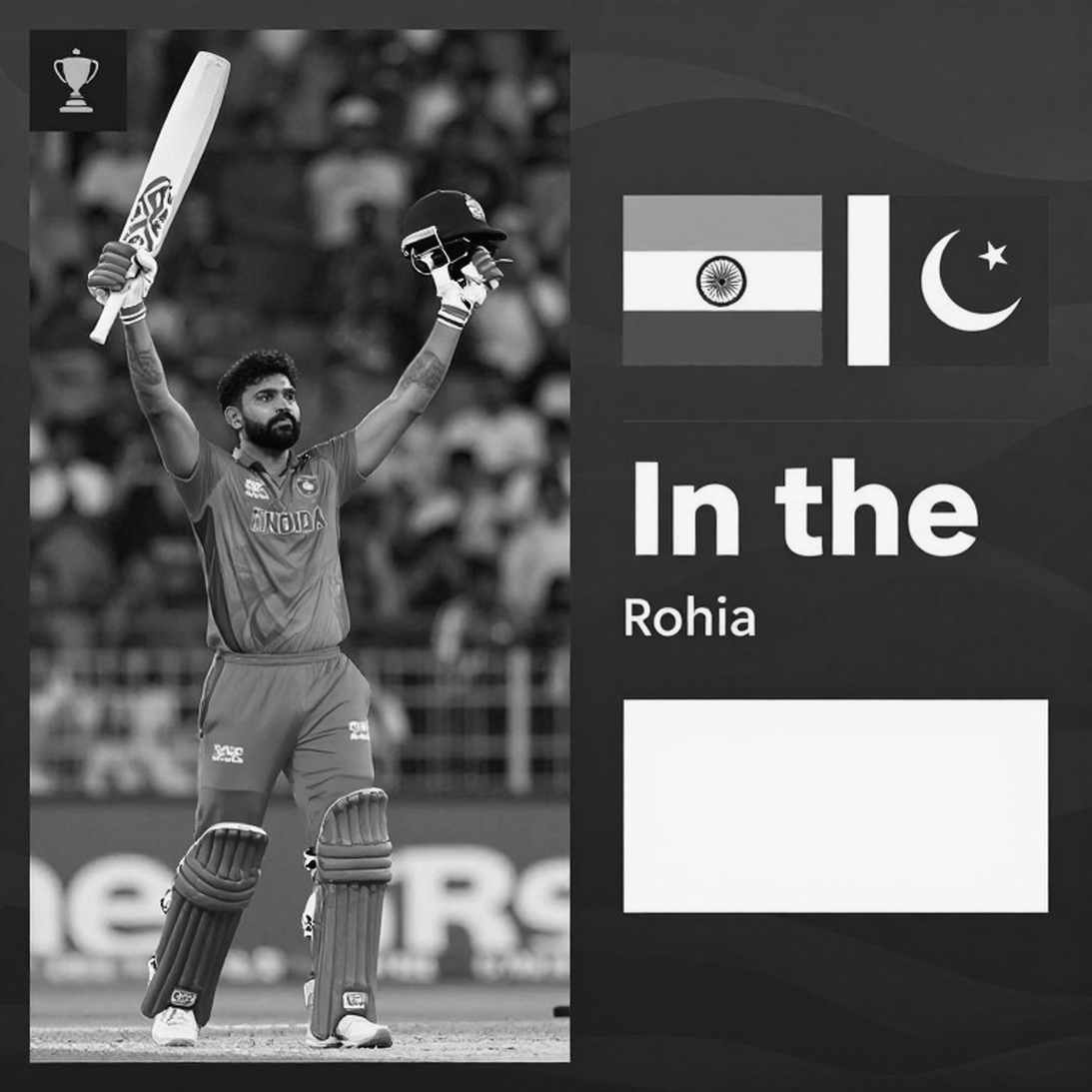
This change altered the culture of the game. In Test cricket, batting through a session without losing a wicket is a strategy. In T20, the same approach reads as dullness to the audience. Something has to happen on almost every ball. That expectation reshaped batting technique, bowling plans and the perceived value of fielding.
But T20's most significant contribution may lie outside the game itself. The format carried cricket into markets where it had not previously been central. Short matches, quick results and a compact viewing window lowered the barrier to entry for new audiences. The cost of that expansion was that it happened while the international calendar was already full, so more cricket arrived and less rest did.
The calendar and player workload
Modern cricket's most contested problem is the calendar. It looks technical, but it is political. The calendar determines how much space each format receives, how many matches each country plays, and which window each league occupies. Behind those decisions sit commercial interests.
Players sit at the weakest point of this equation. Within a relatively short span, an international cricketer is expected to handle three formats, domestic fixtures, franchise leagues, travel, training camps and media obligations. Physical injury is one consequence; mental fatigue is a larger and less well-addressed one.
Some players have begun to take rest openly, stepping away from one format temporarily to remain available for another. These look like individual choices, but the effects are collective. When a leading player misses a series, the competitiveness of that series, the broadcasters' interest and the audience's engagement are all affected.
No simple fix exists. Boards need revenue. Leagues need star players. Broadcasters need specific time slots. Players need rest. Audiences need continuous cricket. Proposed solutions — windows, mandatory rest periods, workload clauses in contracts — are partial rather than complete.
Test cricket: identity crisis or renewed relevance
Few people argue that Test cricket is unnecessary. What has become harder is defending it on commercial grounds. Tests are slow, last five days and frequently end in draws. Yet the strongest defence of the format is technical rather than economic. It remains the most rigorous examination of a player's ability. The batsman has time, but so does the fast bowler. Strategy has room to unfold because the match is long and the conditions shift.
Recent efforts to make the format more compelling have centred on the World Test Championship. A points-based competition across a regular cycle gave some series real stakes, because every match now carries value.
A basic imbalance persists, however. Few countries play Test cricket, and among those only a handful are truly competitive against each other. When two strong sides meet, there is nothing quite like it. When the contest is lopsided, audience interest falls away quickly.
One-day cricket
ODI cricket finds itself in the least certain position of the three formats. It lacks both the traditional prestige of Tests and the market power of T20. During major tournaments it commands global attention; between them, bilateral series are often under-promoted and under-watched.
The most visible reason is the middle overs, which frequently become static. The first ten overs are aggressive, the last ten explosive, and the thirty in between often drift. T20 does not have this problem because every over carries consequence.
Still, the format retains a genuine strength: it offers a workable middle ground between competitive balance and strategic depth. It is neither as long as a Test nor as unpredictable as a T20. For a player, it remains a platform for developing technique and playing long innings. The World Cup cycle keeps it relevant, though between cycles it must justify its place.
Women's cricket
One fact is frequently left out of discussions about cricket's development: women's cricket has grown faster in recent years than any other branch of the sport. This has happened at two levels — performance and structure.
At the performance level, competition at the top is tighter than ever. Bowling pace, batting aggression and fielding standards have all improved measurably. Finals at major events now regularly go to the last ball.
At the structural level, the rise of women's franchise leagues is the most important development. It repeats the economic logic that worked in the men's game: leagues create markets, markets attract investment, and investment encourages more girls to choose the sport as a career.
Inequality remains. In several countries women's cricket still receives less media coverage, less sponsorship and fewer facilities than the men's game. Broadcast rights values vary widely between countries, and that gap directly affects player income and security.
Emerging cricket nations
Cricket's development story has always contained a tension between global ambition and the commercial primacy of its traditional centres. Emerging nations have talent, enthusiasm and occasionally notable results, but they lack continuity in facilities, coaching systems and match exposure.
Building a serious international side requires more than a few gifted players. It requires a strong domestic structure where hundreds of players compete at a high level every year. That is the most significant barrier for newer cricket countries. Their batsmen can shine in T20, but sustained performance in Tests or long ODI tournaments requires depth, and depth comes from domestic systems that take decades to build.
There is also a structural imbalance in revenue. A large share of international revenue comes from a small number of major markets, so schedules are built around them. Emerging nations consequently receive fewer opportunities, which slows their development further.
Technology and accuracy
Technology is no longer optional in modern cricket. Ball tracking, ultra-edge, snickometer, slow-motion cameras and the decision review system have become routine parts of the game. The stated goal is to reduce error and increase fairness, and in most cases this has worked. The review system has prevented a number of significant controversies.
But technology has limits, and debate around them continues. Should the same standards apply to spin and pace? Do all teams have access to the same technology? Is the technology used in bilateral series the same as at major tournaments? These are technical questions with fairness at their core.
Another consideration is pace of play. Time spent on each review, each check and each pause alters the viewer experience. In T20 especially, where the attraction depends on speed, long video breaks can be a real problem.
Broadcast, market and emerging challenges
Cricket now earns the largest share of its income from broadcast rights, and this has shaped the game's structure. Match timing, over rates and break durations are, to some degree, set around television requirements. The benefit has been resources for player pay, stadium facilities and grassroots programmes. The risk is that when income concentrates in one source, that source's priorities gradually become the sport's priorities.
A new challenge is emerging from digital platforms. Traditional television audiences are no longer growing at previous rates, while digital consumption is rising quickly. The composition of broadcast revenue will change in the coming years. Leagues and boards that adapt will benefit; those relying on the old model will face risk.
Audience behaviour has changed as well. Viewers no longer necessarily watch a full match; they watch key moments, short clips, or follow discussion on social media. This has changed promotion, and it has made it necessary for matches to produce moments that carry meaning inside a short clip.
Trust in administration
One issue receives less attention than it deserves: trust in cricket administration. The structure is complex — a global body, national boards, and franchise leagues with their own interests. Their priorities are not always aligned.
When administrative decisions appear to be shaped by commercial interests, public trust declines. Questions about the number of matches, venue selection and scheduling priorities recur, and they are not always unfounded. That is the sport's vulnerability. The most practical route to restoring trust is transparency: explaining decisions, clarifying financial distribution criteria, and formally protecting player interests in the rules.
What a path to balance looks like
Cricket is searching for a durable balance across three formats, and its future depends on how it finds one.
The first route is the calendar. A genuine rest period for players must be guaranteed in practice, not only on paper. Some boards may take a short-term financial hit, but over time that cost is protection, because a fatigued player is not a good product.
The second is clarity of priority between formats. Treating every format and every bilateral series as equally important is not realistic. Defining some competitions explicitly as major and others as development-focused would add clarity rather than inequality.
The third is investment in women's cricket. The potential remains underused. The market appears ready and the talent exists; what is needed is structural investment, and that investment is likely to be durable.
The fourth is genuine opportunity for emerging nations. This is not a question of sympathy but of the sport's future. A game confined to a small part of the world cannot reach its full potential.
The fifth, and most fundamental, is protecting the core of the game. Cricket can live with three formats, and it needs to. The depth of Tests, the balance of ODIs and the appeal of T20 each have a place. As long as those places remain clear, the sport will hold together. The day that clarity disappears, cricket will lose the largest part of its identity.
Conclusion
Cricket remains one of the world's most popular sports, but it is no longer asking the questions it once asked. The real question is not how many more viewers can be added. It is whether this expansion can be made sustainable — for players, for administrators, and for the identity that turned a simple game into a global culture.
That question spans everything from a five-day Test to a three-hour T20. It will not be resolved by a points table or by a single league night, but by a search for lasting balance. And that balance will only be found when the sport is built more from structure than from sentiment.