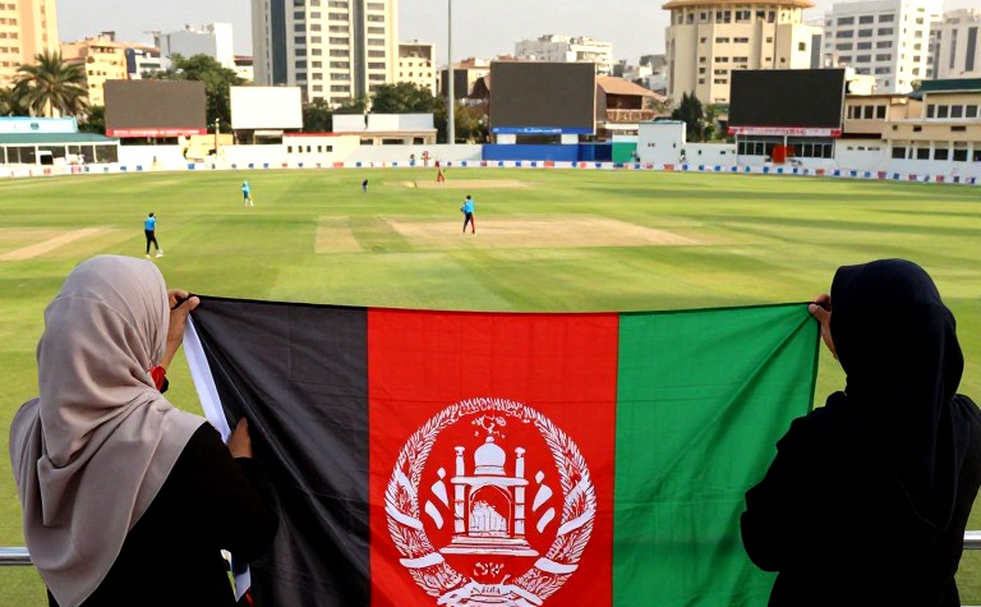
Cricket's Data Era: When Numbers Become the Story, and the Story Rings Hollow
क्रिकेट में डेटा-विश्लेषण का महत्व बढ़ा है, लेकिन टेस्ट, वनडे और टी20 के आँकड़े अलग-अलग होते हैं और इन्हें मिलाना विश्लेषण की बुनियादी गलती है। छोटे नमूने — जैसे एक टी20 लीग सीज़न की 15-16 पारियाँ — से लंबी अवधि के निष्कर्ष निकालना भ्रामक होता है। नीलामी की ऊँची कीमत अंतरराष्ट्रीय क्रिकेट की मज़बूती का प्रमाण नहीं है; लीग-फ़ॉर्म और देश के लिए प्रदर्शन अलग-अलग पैमाने हैं। खेल-रिपोर्टिंग में 'उपलब्ध नहीं' और 'जोखिम नहीं' को एक नहीं समझना चाहिए — पहला तकनीकी विफलता है, दूसरा निष्कर्ष। भरोसेमंद विश्लेषण की पहचान यह है कि उसमें कम से कम एक सत्यापनीय तथ्य हो और प्रारूप तथा संदर्भ स्पष्ट रूप से बताया गया हो। यह सामग्री केवल खेल-सूचना के लिए है और सट्टेबाज़ी सलाह नहीं है।
Over the past two decades, the biggest change in cricket has not happened on the pitch but in the database. There was a time when a captain's decision rested on experience and gut feel; today the same decision is tested against strike rates, economy rates, matchup charts and venue-wise splits. Teams employ their own data analysts, hundreds of hours of video are broken down before an auction, and broadcasters push three or four different numbers onto the viewer's screen for every ball.
That change is not inherently bad. The trouble begins when numbers replace analysis, and analysis is replaced by promotion. Cricket journalism and cricket analytics now face the same question: is the number being shown placed in its correct context? And where there is no context, do we still know how to stay silent?
Three formats, three different worlds
The most basic analytical error in cricket is weighing Test, ODI and T20 numbers on the same scale. In Test cricket a batter is measured by average and the ability to bat long; in T20 the same batter is measured by strike rate. A bowler averaging 22 in Tests may be useful at an economy of 9 in T20 — or entirely ineffective. Merging these numbers is technically easy and analytically wrong.
Yet the error is everywhere. After one strong T20 league season, a player's 'average' is quoted without saying which format it belongs to. A bowler's economy is cited without clarifying whether it comes from the powerplay or the death overs. Since the launch of the World Test Championship, Test cricket has its own points system with no connection to ODI or T20 rankings. An analyst who draws conclusions by mixing all three is understanding his own convenience, not the game.
The illusion of the small sample
A T20 league season gives a batter 15 or 16 innings, sometimes fewer. Three good innings can suddenly lift an average. Media and social media both demand an immediate trend: 'back in form', 'finished', 'a new superstar has arrived'.
The scale of international cricket is far larger. Virat Kohli, Steve Smith, Kane Williamson and Joe Root — once grouped as the 'Fab Four' — are judged on years of consistency, not a single series. Sachin Tendulkar's career spanned more than two decades before he retired in 2026; that kind of patience is becoming rare in today's data age, where a verdict follows every innings.
Selection suffers as a result. A young player who produces two good league innings enters the national conversation, while three consistent domestic seasons go unnoticed. That is bad for the selection process, because a long domestic record is precisely what shows whether a player can survive adverse conditions.
The 'next Tendulkar' trap
Every decade, some young batter is labelled the 'next Sachin Tendulkar' or the 'next Virat Kohli'. The label sells well, but its predictive record is poor. The reason is simple: greatness is determined less by talent than by mental resilience, injury management, technical adaptation and long-term consistency. None of those is visible at 19.
When the media ties a player to such a label, expectations are artificially raised. An ordinary bad series is then presented as 'failure', when it is a natural part of any young player's development. The injustice is not only to the player but to the reader, who believes they have read an analysis when they have read only a prediction.
The hype cycle and social media
A large part of cricket's public narrative is now set by social media. A catch, a century, a controversial dismissal — within hours the clip is everywhere and reactions pile up. The weakness of this cycle is that it leaves no room for context. What was the pitch like, the weather, the quality of the opposing attack, the state of the match? The conclusion arrives before the detail does.
This is where journalism is hardest. If the media runs with the hype, it loses credibility. If it stands entirely apart, it never reaches the reader. The only practical route is restraint in language: check the circumstances before writing 'explosive innings', check age and recent record before writing 'career over'.
League money versus the international yardstick
One basic rule of cricket economics is often forgotten: a high auction price is not proof of international strength. A large IPL sum reflects market demand, not Test utility. A player may earn a big contract for T20 specialism while having a limited role in the red-ball game — and the reverse is equally true.
The IPL has run since 2026 and is today the world's largest cricket league. Several countries have since launched their own leagues, creating competition in the market. Players like Rashid Khan are the clearest example: a spinner who plays for Afghanistan has built a place across many of the world's T20 leagues. That is a positive globalisation story, but it is also worth remembering that league form and national duty are different things, and presenting one in place of the other is an analytical error.
The arithmetic of the auction and its limits
Auction analysis usually carries a wave of excitement: once a player is bought, predictions appear about whether he will 'justify' the price. In reality an auction price is the product of many variables — team need, the domestic-player quota, scarcity of alternatives, and sometimes the mood of the bidding room. The same player can go for different prices in different years without any change in ability.
Drawing long-term conclusions from auction data is therefore risky. More useful is examining which role a team prioritised in its strategy — pace, middle order, or emerging domestic talent. Total spending often says more about a team's plan than any single player's price.
Rules, governance and controversy: the importance of context
Rule controversies are not new to cricket. The Duckworth-Lewis-Stern method is the standard solution for rain-affected matches, yet it is questioned at every major tournament. Slow over-rate fines, fielding restrictions and DRS debates stay in the headlines. But the most important discipline when writing about them is never to confuse criticism of a rule with an allegation of match-fixing.
Past episodes — the Hansie Cronje affair of 2026, the 2026 Lord's spot-fixing case and the 2026 IPL spot-fixing case — matter because they forced cricket's anti-corruption system to strengthen. Today the ICC's Anti-Corruption Unit is active and reporting mechanisms exist for players. Linking those historical examples to any current player, team or match without evidence would amount to an unsupported allegation — and that is a line journalism must never cross.
Geopolitics also shapes the cricket calendar. India and Pakistan have not played a full bilateral series since 2026-13; the two sides meet only in multi-nation ICC events. Any analysis that ignores this reality while discussing an 'exciting bilateral series' is not factual. Likewise, suspension rules exist for boards subject to government interference, and they should be mentioned only when such an event has actually occurred.
The betting market and the responsibility of language
A large share of cricket coverage is now tied to prediction and expectation. Fantasy sport and betting markets are part of this ecosystem, which is why caution in the language of sports journalism has become essential. Estimating a player's performance or predicting a result falls within sports information, but it must be clearly stated that this is not advice.
Sporting outcomes carry high uncertainty. One ball, one catch, one toss decision can change a match. The value of any analysis therefore lies not in its 'accuracy' but in its reasoning: where the numbers came from, what their context is, and what conclusions should not be drawn from them.
The silence of the pipeline: 'not available' does not mean 'no risk'
There is a technical side to this debate that stays invisible to the ordinary reader. Modern sports newsrooms run stories through a data pipeline: content is extracted from a source, key facts are separated out, analysis follows, then publication. If extraction fails at the first stage — the page is JavaScript-rendered, the content sits behind a paywall, or the fetch simply failed — every later stage runs on empty input.
The most dangerous error here is for an analysis to be filled with 'not available' everywhere while the reader interprets it as 'no problem'. Those are entirely different statements. 'Not available' means no examination took place; 'no risk' means an examination took place and found nothing. The first is a technical failure, the second is a finding. Treating them as the same is the same error as merging Test and T20 numbers.
The fix is simple and clear. Every data-driven report should contain at least one concrete fact traceable directly to a source. If that fact is absent, the report should not be published — however ready the template. The pressure to fill an empty template always leads towards fabricated content, and a fabricated sports story is more damaging than a blank page any day.
A short checklist for readers
Five questions can be asked of any cricket analysis. First: which format does this number belong to — Test, ODI or T20? Second: how large is the sample — one series, one season, or an entire career? Third: what were the conditions — pitch, weather, quality of the opposition? Fourth: is this fact or prediction? Fifth: who is the source, and does it have a vested interest?
Answers to these five questions immediately reveal the quality of most analyses. An analysis that cannot satisfactorily answer even three of them is probably not analysis — it is an opinion with statistical decoration.
Conclusion
The arrival of data in cricket is inevitable and welcome. It has made selection more rational, bowling plans more nuanced, and brought the viewer closer to the depth of the game. But data is a tool, not a conclusion. The moment we treat a number as truth in itself, analysis ends and belief takes its place — belief that is often wrong.
The real challenge for sports journalism today is not how to gather more statistics; there are already far too many. The challenge is to say the right thing with fewer numbers, and to stay silent when facts are unavailable. Newsrooms that adopt this discipline will preserve their credibility in the long run — because the cricket audience values truth above statistics, and it catches on quickly.